


The BTFA Model: The Neuroscience of Change

A proven, science – backed framework that transforms leadership, drives cultural change, and enhances organizational performance

What is a the BTFA Model?

Understanding the BTFA Model​

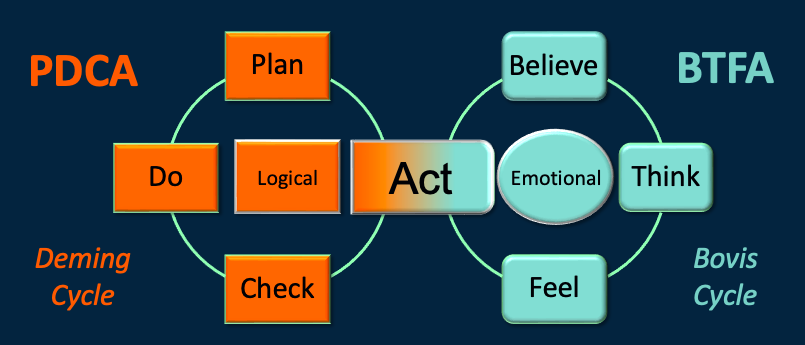
The BTFA Model (Believe – Think – Feel – Act) is a neuroscience – based framework that helps leaders and organizations drive sustainable change by aligning beliefs, thoughts, emotions and actions.

Change initiatives often fail because they focus  only on processes and systems, neglecting the human factor. The BTFA Model ensures behavioral alignment for lasting transformation.

Continuous improvement follows the PDCA cycle, but our brains don’t naturally work that way because decisions are mostly driven by emotions. 

To perform at our best, we need to balance rational processes with emotional realities.

By integrating psychology, leadership science and behavioral change principles, BTFA empowers leaders to drive high-impact results.

How the BTFA Model Works

Believe

Core beliefs shape behaviors. The first step is identifying and reshaping limiting beliefs that hinder progress.

Think

Thoughts drive decision-making. By fostering strategic and growth-oriented thinking, leaders can inspire positive change.

Feel

Emotions fuel motivation. Engaging emotional intelligence ensures commitment and sustained behavioral change.

Act

Actions create results. By reinforcing belief-driven behavior, organizations can embed lasting transformation.

Each phase of BTFA is interconnected, ensuring that leadership transformation is deeply rooted in human behavior and neuroscience.

Why organizations choose BTFA

Human Operating System

BTFA focuses on the real driver of behaviour: belief.

Built for Transformation

Designed to address resistance, disengagement, and misalignment directly.

Operational + Leadership Lens

Connects leadership behaviour to execution, culture, and performance.

Toyota-Linked Leadership Insight

Includes leadership perspective from former Toyota Country President Levent Turk.

The missing piece in most transformation programmes

Most organizations invest heavily in developing actions, but rarely in developing people.

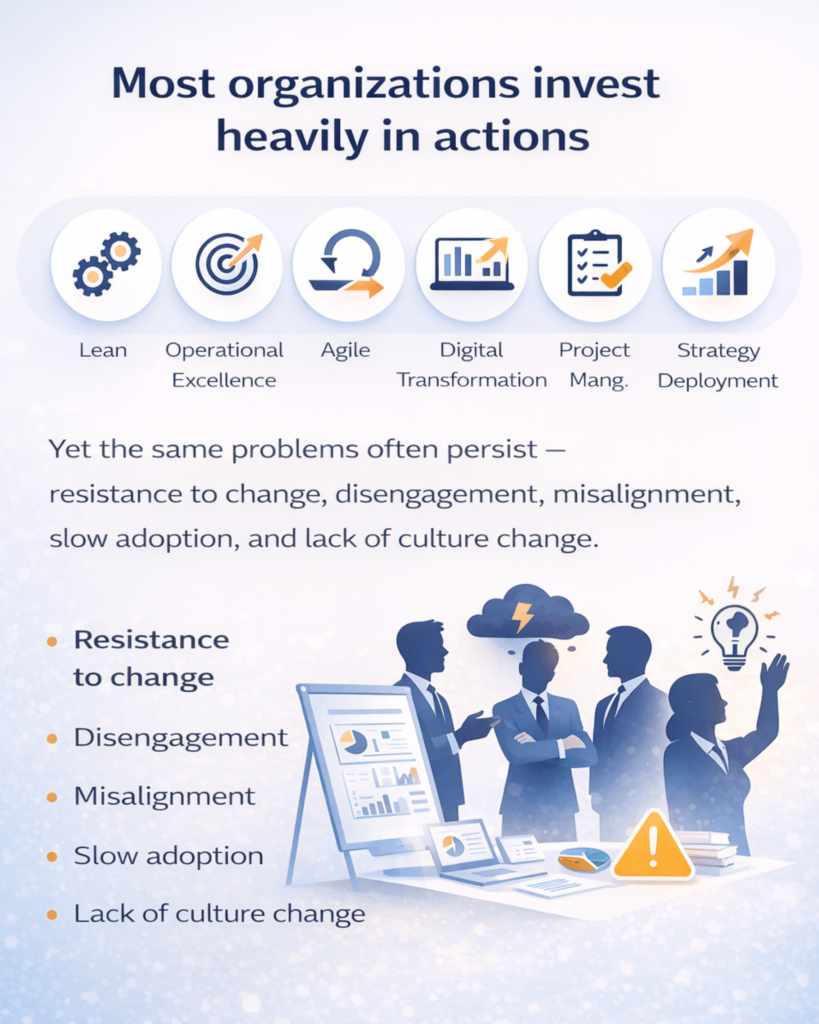
Most organizations invest heavily in actions: Lean, operational excellence, agile, digital transformation, project management, and strategy deployment. Yet the same problems often persist — resistance to change, disengagement, misalignment, slow adoption, and lack of culture change.

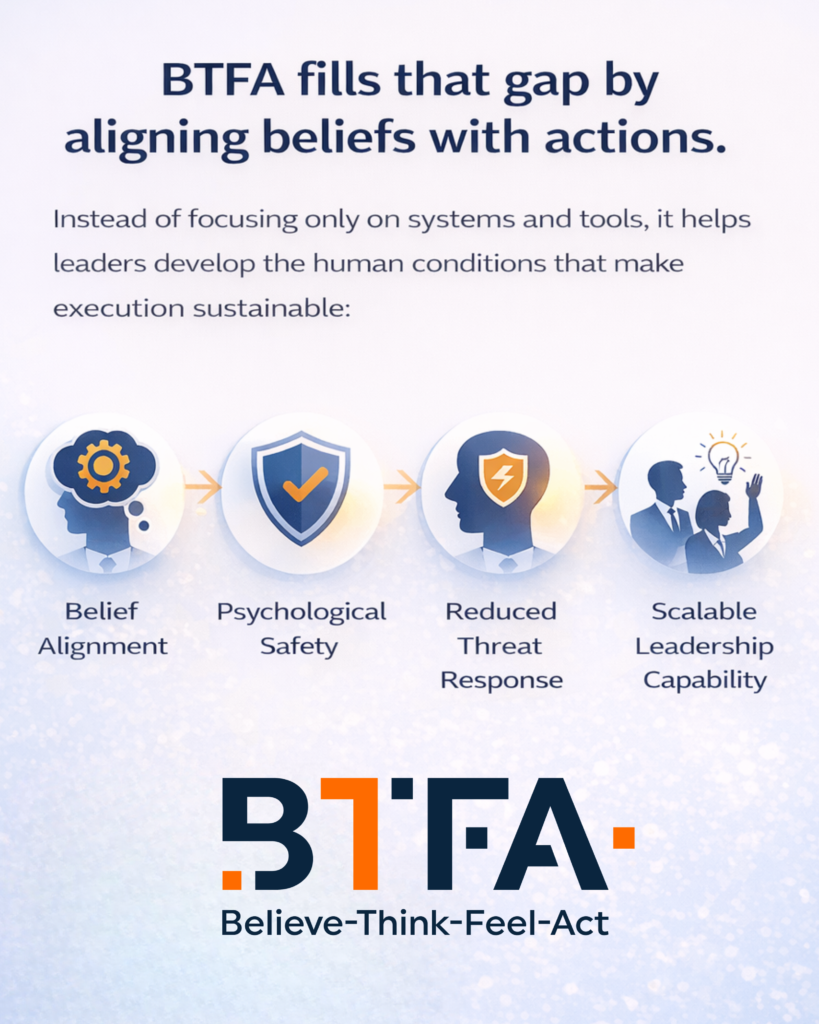
BTFA fills that gap by aligning beliefs with actions. Instead of focusing only on systems and tools, it helps leaders develop the human conditions that make execution sustainable: belief alignment, psychological safety, reduced threat response, and scalable leadership capability.

Why transformation efforts slow down or fail

Most organizations do not fail because they lack strategy, tools, or investment. They fail because people do not think, feel, and act in alignment under pressure. Resistance, misalignment, disengagement, and inconsistent leadership behaviour quietly weaken execution.

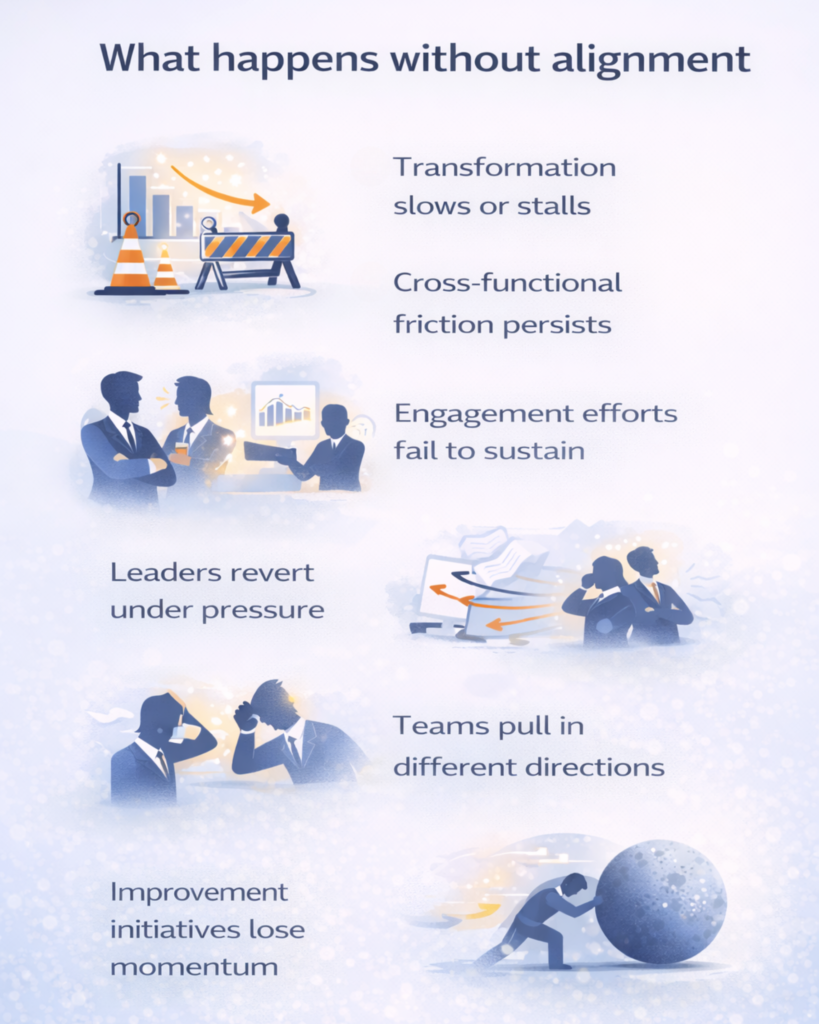
What happens without alignment

  • Transformation slows or stalls
  • Cross-functional friction persists
  • Engagement efforts fail to sustain
  • Leaders revert under pressure
  • Teams pull in different directions
  • Improvement initiatives lose momentum

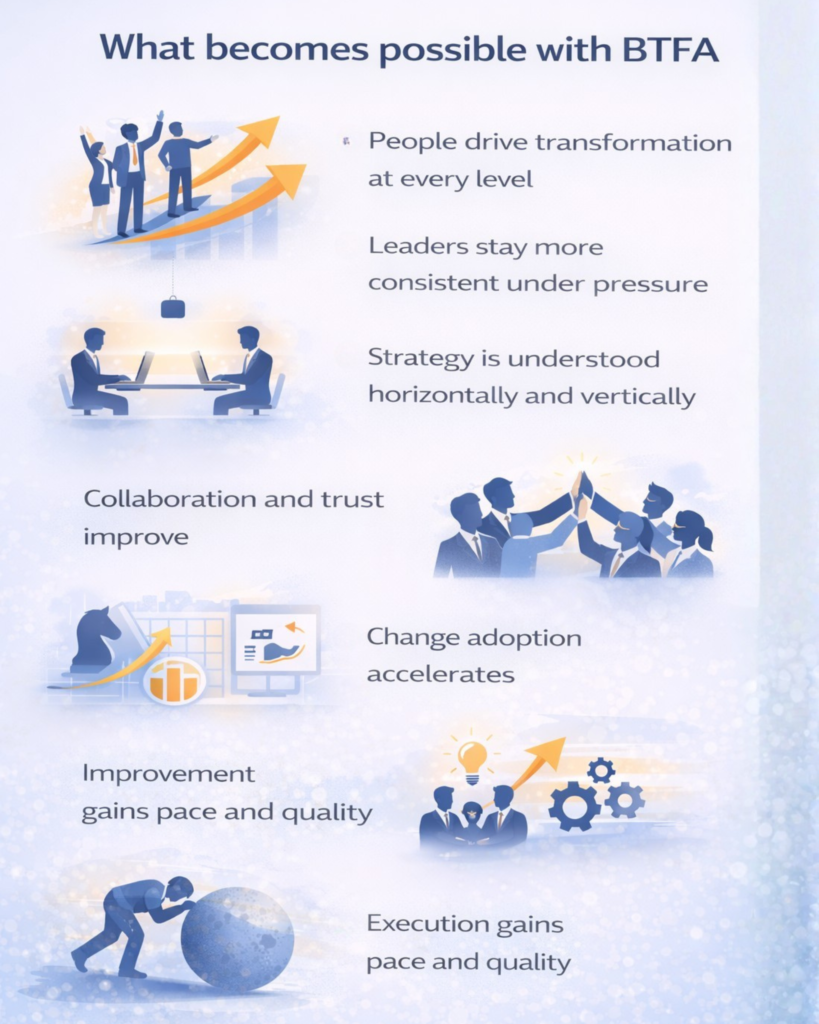
What becomes possible with BTFA

  • People drive transformation at every level
  • Leaders stay more consistent under pressure
  • Strategy is understood horizontally and vertically
  • Collaboration and trust improve
  • Change adoption accelerates
  • Execution gains pace and quality
We fail not because we aim too high, but because we fail to notice the quiet resistance of the human brain, longing for safety before it dares to grow.

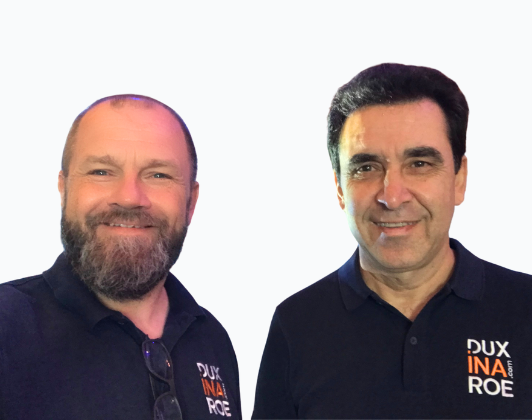
David & LeveNT