

Transactional leadership often feels like a simple trade: rewards for results, penalties for mistakes. But this style has limits you can’t ignore if you want lasting impact. With the BTFA model, you’ll see how to move beyond basic rewards and build a culture where accountability and psychological safety thrive. Ready to rethink your approach and boost performance? Let’s explore what transactional leadership really offers—and what BTFA adds to the mix.
For those interested in Transformational Leadership Training, Duxinaroe offers a comprehensive approach that goes beyond the basics. Additionally, Coaching with BTFA provides insights into rewiring leadership behaviour for thriving cultures. Learn more about how Transactional Leadership is redefined with BTFA for enhanced commitment.
Rethinking Transactional Leadership
Strengths and Limits of Transactional Leadership
Transactional leadership offers clear structures and expectations. It’s straightforward and relies on clear rewards and penalties. This makes it effective in stable environments where tasks are routine. However, it has its limits. Relying solely on this method can stifle creativity and limit growth. When situations change rapidly, or innovation is needed, this style can be restrictive. Here’s the key insight: Transactional leadership alone won’t sustain a high-performance culture. To thrive in today’s dynamic environments, leaders must blend transactional elements with more adaptive strategies.
Transformational vs Transactional Leadership
Transformational and transactional leadership differ significantly. Transformational leaders inspire and motivate, aiming to change and develop teams. They focus on vision and long-term goals. Transactional leaders, on the other hand, focus on order, structure, and precision. Both styles have their place. In fact, most effective leaders use a mix of both. The balance depends on the context and the needs of the team. Ask yourself: Are your current leadership strategies flexible enough to adapt to unexpected challenges?
Contingent Reward and Management by Exception
Contingent reward and management by exception are core parts of the transactional style. Contingent reward involves setting clear goals and providing incentives for reaching them. Management by exception means intervening only when standards are not met. While these methods promote accountability, they can also lead to a culture of minimum effort if not balanced with other strategies. Consider this: Are you rewarding only the bare minimum, or are you encouraging broader contributions?
Introducing the BTFA Model

Neuroscience of Leadership and Neuroplasticity
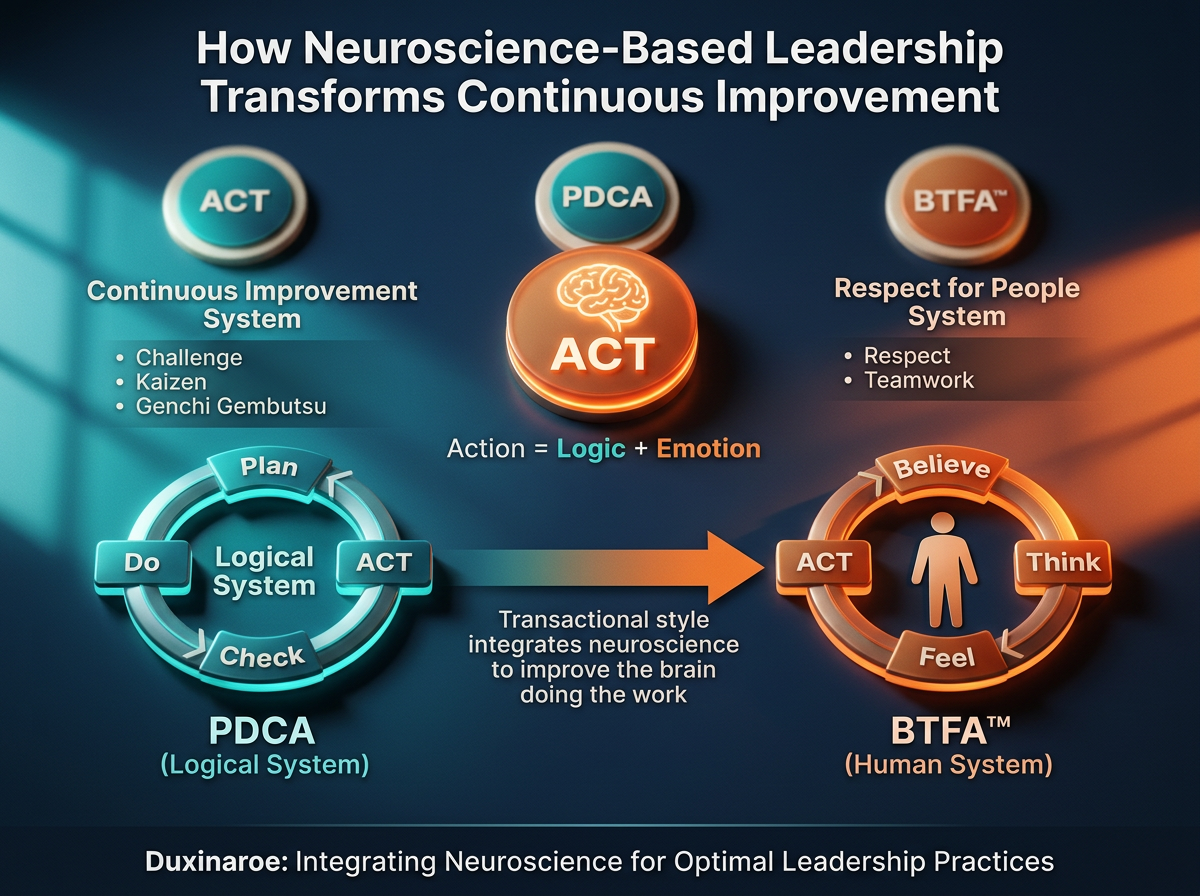
Leadership isn’t just about managing tasks; it’s about understanding how people think and adapt. The BTFA model taps into the neuroscience of leadership. It explores how the brain can change and grow, a concept known as neuroplasticity. This means leaders can develop new skills and adjust their styles to meet evolving demands. This adaptability is crucial for fostering a high-performance culture. Reflect on this: How often do you challenge your own leadership habits?
Habit Change for Leaders
Changing habits isn’t easy, but it’s essential for growth. The BTFA model supports leaders in identifying and altering habits that no longer serve them. Through small, consistent changes, leaders can improve their effectiveness and influence. Think about it: What small habit could you change today that would have a big impact on your team’s success?
Building a High-Performance Culture
Creating a high-performance culture requires more than just setting goals. It’s about instilling values and behaviours that drive success. The BTFA model helps leaders build environments where everyone feels valued and motivated to contribute. This involves fostering trust, encouraging open communication, and recognising achievements. Here’s the takeaway: A strong culture is your best asset for sustaining long-term success.
Implementing BTFA for Organisational Success
Enhancing Psychological Safety and Accountability
Psychological safety is crucial for innovation and risk-taking. When team members feel safe, they are more likely to share ideas and take calculated risks. The BTFA model emphasises creating environments where accountability and safety coexist. This balance leads to a more engaged and proactive workforce. Reflect on this: How safe do your team members feel to express their thoughts?
Culture Change Programme and Operational Excellence
Achieving operational excellence requires a shift in culture. The BTFA model provides a framework for implementing change programmes that align with organisational goals. This involves engaging teams at all levels and ensuring that everyone understands the importance of their role. Here’s the challenge: Can your current culture support the changes needed for excellence?
Strategy Deployment and Frontline Leadership Training
Successful strategy deployment relies on effective leadership at all levels. Frontline leaders play a critical role in translating vision into action. The BTFA model offers training solutions that equip leaders with the tools they need to drive change and achieve goals. The longer you wait to invest in leadership development, the more you risk falling behind. So, are you preparing your frontline leaders to meet future challenges?
In conclusion, transactional leadership has its strengths, but to truly excel, integrating the BTFA model can transform organisational culture and performance. Embrace the change, and watch your team thrive.